


How long is 30 feet?
It’s 9.144 meters, 360 inches, or 10 yards. That’s about 12 adult steps, or two sedans parked bumper to bumper.
Maybe you’re sizing a fence. Maybe a boat listing says “30 feet long” and you can’t picture it. Or you’re wondering what 30 feet looks like in real life.
Numbers on a screen don’t help much. A tape measure does, but you don’t always have one handy.
So here’s the plan. You’ll get every conversion first, from 30 feet in centimeters to 30 feet in gaj. Then you’ll learn how to estimate the distance with just your feet.
After that, we’ll look at 20 real things that hit the mark, from a stretch limo to a whale shark. Ready? Let’s make 30 feet feel as familiar as your own living room.
30 Feet, Converted Every Way You Might Need It
Let’s start with the math, since it’s what most people search first. A 30 foot length converts cleanly because the foot is a fixed unit. One foot equals 12 inches and exactly 0.3048 meters.
Here’s the full 30 feet conversion in one place:
| Unit | 30 Feet Equals |
| 30 feet in inches | 360 inches |
| 30 feet in meters | 9.144 meters |
| 30 feet in centimeters | 914.4 cm |
| 30 feet in millimeters | 9,144 mm |
| 30 feet in yards | 10 yards |
| 30 feet in gaj | 10 gaj |
| 30 feet in miles | 0.00568 miles |
If you grew up with the metric and imperial units mix, a simple trick helps. Multiply feet by 0.3 for a quick 30 feet to meters guess. You’ll land on 9 meters, which is close enough for most jobs.
A quick word on gaj. One gaj is 3 feet, the same as a yard. So 30 feet in gaj comes out to 10, and that’s handy if you’re reading a plot listing.
Now a common mix-up. People often search “how long is 30 inches” when they really mean feet. Thirty inches is only 2.5 feet, or about 76.2 centimeters. That’s roughly the length of a baseball bat.
Also, 30 feet in square feet isn’t a real conversion. Feet measure length, and square feet measure area. A square that’s 30 feet on each side covers 900 square feet.
Read Also: How Long Is 11 Inches? 19 Real Things And Full Conversion Guide
How to Estimate 30 Feet With No Tape Measure
You don’t always have a tape in your pocket. That’s fine, because your body and everyday stuff work as rulers. This is the easiest way to start measuring 30 feet without a tape measure.
The average adult step length is about 2.5 feet. So 30 feet takes roughly 12 normal steps. Try it in your hallway once, and count how many steps you take. Your number might be 11 or 13, and then you’ve got a personal ruler for life.
Here are a few more shortcuts for estimating 30 feet:
- Shoe length: A men’s size 10 shoe is about 1 foot, so walk 30 heel to toe steps.
- Dollar bill: It’s 6.14 inches long, so you’d need about 59 of them end to end.
- Sedan length: Most sedans run 15 to 16 feet, so 30 feet is two cars bumper to bumper.
- Standard door: A door stands near 6.7 feet, so you’d stack about four and a half.
Walking helps with time, too. At an easy pace of 3 mph, you cover 30 feet in about 7 seconds. So “how far is 30 feet to walk” has a simple answer: about a dozen steps and one deep breath.
20 Everyday and Surprising Things That Hit the 30 Foot Mark
Let’s tackle the big question: what does 30 feet look like? Below are things that are 30 feet long, plus a few things that are 30 feet tall. Some match exactly, and some sit a little above or below. I’ll flag which is which, because honest numbers beat tidy ones.
Stretch Limousine
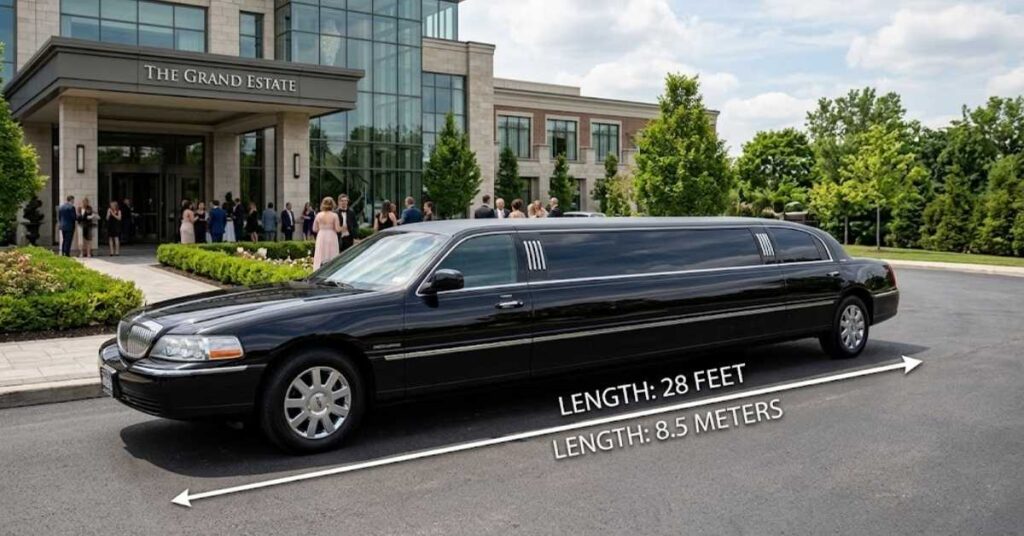
A classic stretch limo often runs 22 to 30 feet. The long SUV versions, like the stretched Hummer, push right to the top of that range.
Picture it parked at a curb. You’d see it covers two normal parking spaces and then some.
One Side of a Volleyball Court
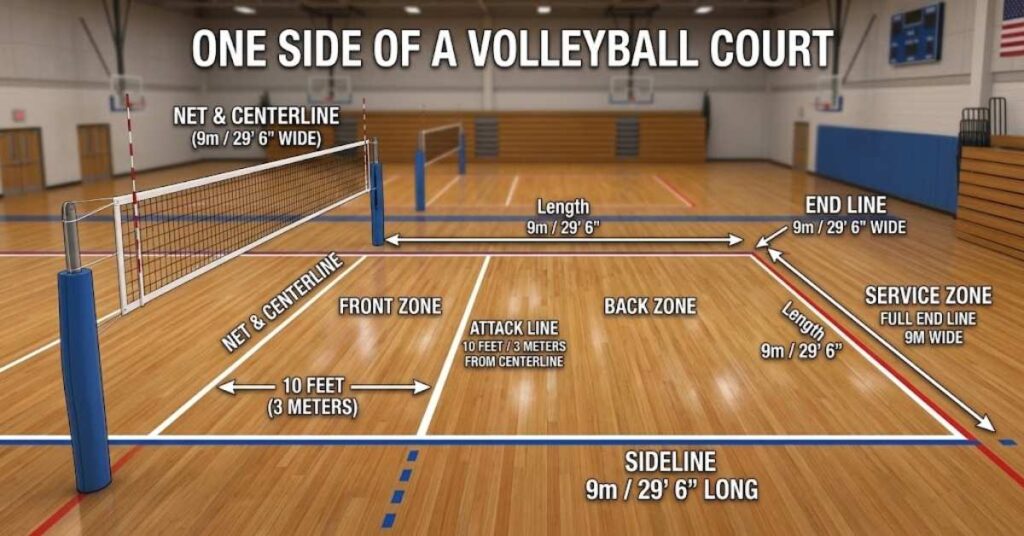
A full volleyball court is 18 meters long. Split it at the net and each side is 9 meters, or 29.5 feet.
So when you stand on one baseline, the net sits about 30 feet away. That’s a great gym floor visual.
A Mature Whale Shark

Whale sharks are the biggest fish alive. Adults commonly measure 20 to 32 feet, and a few grow even bigger.
A 30 footer is longer than a school bus seat row. And yet it eats plankton.
A Compact Three-Car Garage, Wall to Wall
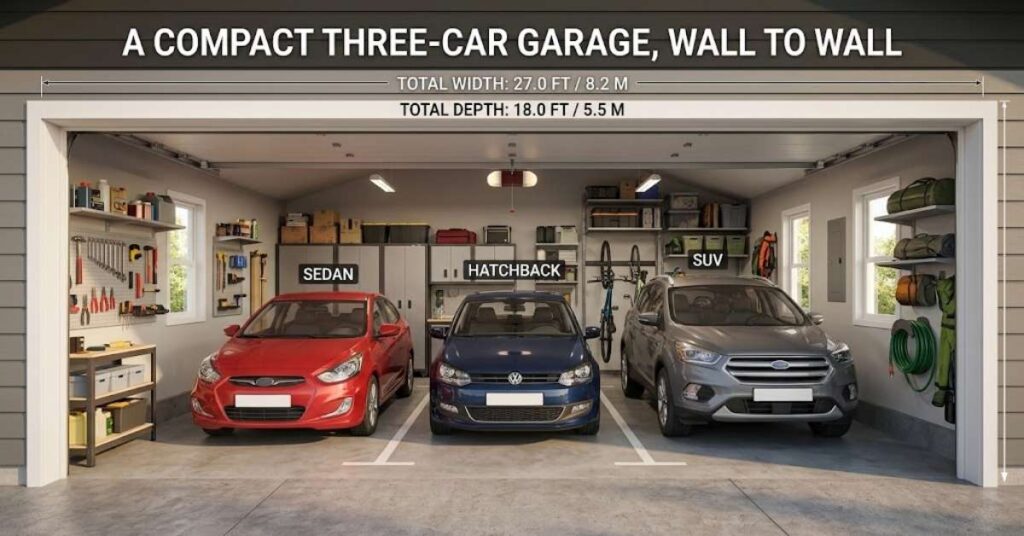
A tight three-car garage width is about 30 feet. Roomier builds stretch to 36 feet or more.
Measure your own and see where you land. It’s one of the real-life length examples you can check in minutes.
An Olympic 10-Meter Diving Platform

The top platform sits 10 meters up, which is 32.8 feet. That’s a touch over 30 feet, but it’s the best example of things that are 30 feet tall you’ll ever watch on TV.
Divers hit the water in under 1.5 seconds. Imagine climbing that ladder.
A 30-Foot Canal Narrowboat

Narrowboats in the UK start around 30 feet and go past 70. They’re only about 6 feet 10 inches wide, so the 30-foot canal narrowboat looks like a long, thin hallway on water.
Short ones suit solo travelers well. You’ll turn corners easily, too.
A Saguaro Cactus Past a Century Old

Saguaros grow painfully slowly. Tall specimens often reach 30 feet or more, and that takes well over a hundred years.
A mature saguaro cactus height of 30 feet means you’re looking at something that’s older than most houses nearby.
A 30-Foot Flagpole

This is a standard size for schools, car dealerships, and town halls. Most flagpole height measurements for commercial poles start at 20 feet and climb from there.
A 30 footer flies a 4 by 6 foot flag nicely. It’s tall enough to spot from the road, yet short enough for a small crew to install.
A Squash Court, End to End
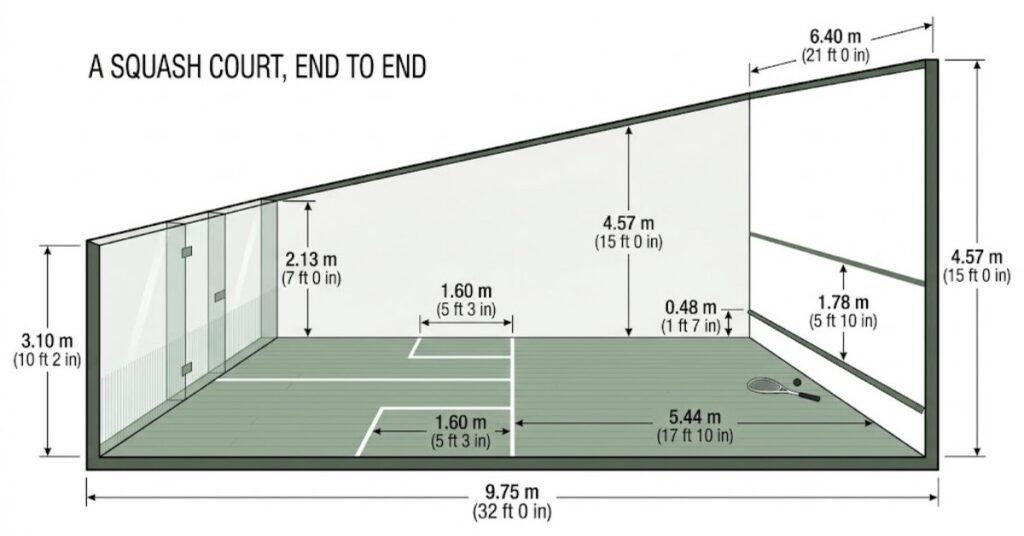
An international squash court is 9.75 meters long. That’s about 32 feet, so it’s just over 30 feet.
Next time you watch a match, remember the ball covers that entire length in a blink.
A Bull Orca

Adult male orcas typically measure 20 to 26 feet. The very largest on record come close to 30 feet, so this one’s the stretch of the list.
Even so, a big bull is longer than most pickup trucks with a trailer hooked on.
A 30-Foot Round Above-Ground Pool, Across
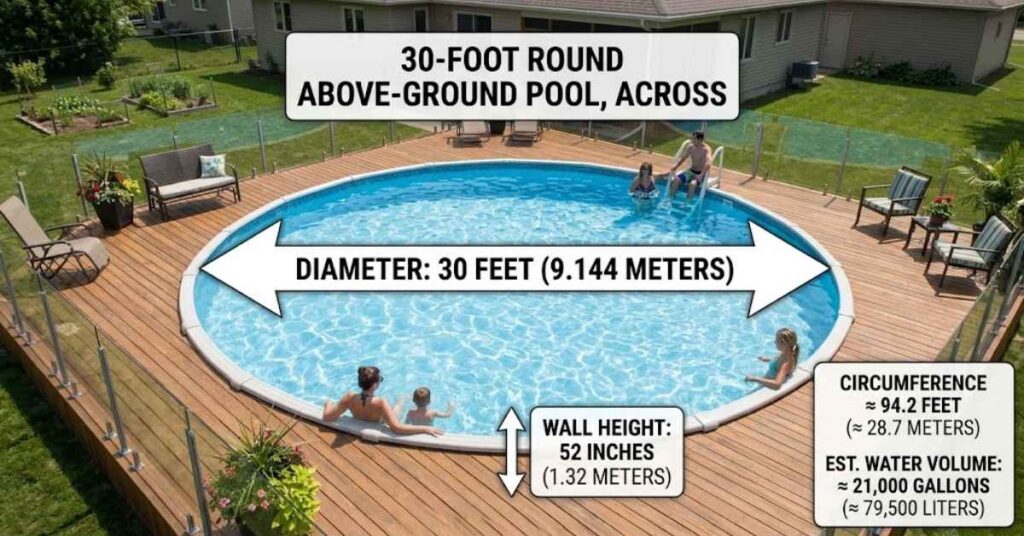
This is one of the most popular backyard pool diameter sizes sold. It holds a lot of water and fits many suburban yards.
Shopping? Check pool liner size and pool cover dimensions carefully, since covers usually run a few feet wider than the pool itself.
A Two-Lane Residential Street, Curb to Curb
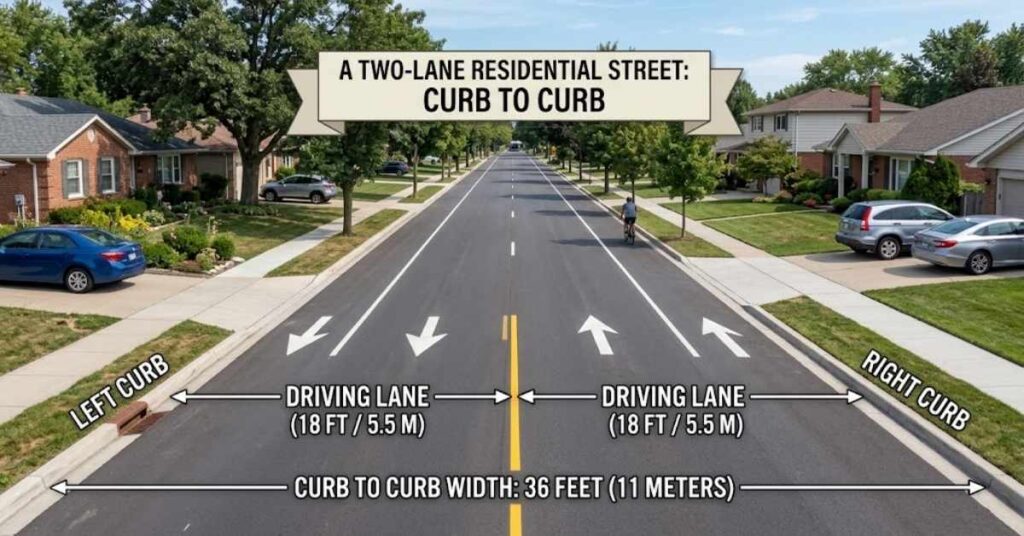
Most neighborhood roads are 24 to 36 feet across, and 30 feet sits right in the middle. That’s two travel lanes with a little room to spare.
Check your own street. Residential road dimensions vary by city, so a quick measure tells you more than any guess.
An Indoor Climbing Wall
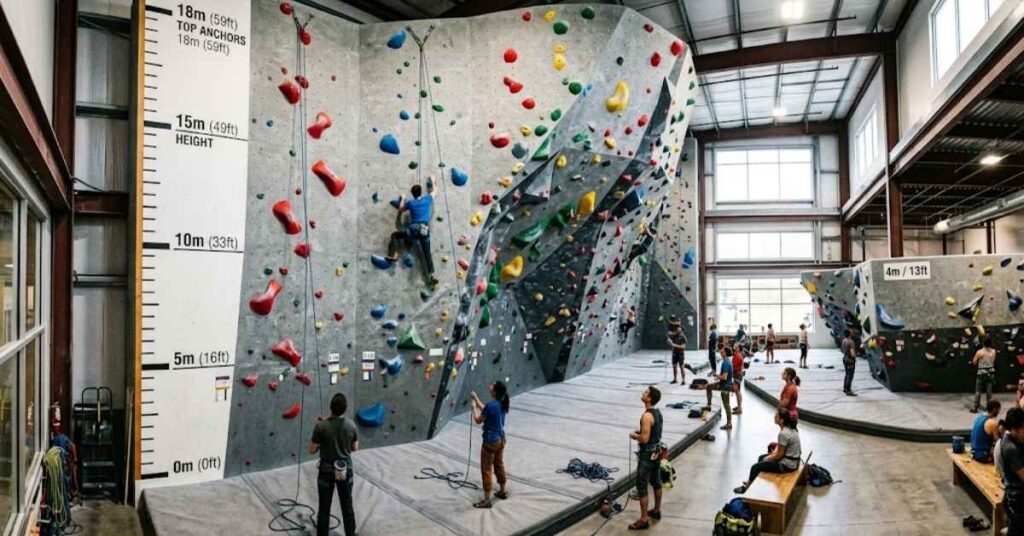
Many gym walls reach 30 feet, especially in top rope areas. It’s tall enough to feel scary and short enough that most beginners finish it.
Look down from the top and you’ll understand how big 30 feet really feels. Your stomach will tell you.
A 30-Foot Center-Console Fishing Boat

These boats are popular for offshore trips. Boat dimensions in feet matter a lot here, since a 30 footer usually carries twin or triple outboards and needs a real trailer or slip.
It’s also about the length of a mid-size RV. Parking it isn’t casual.
A Light Plane’s Wingspan

Small trainers measure in the same ballpark. A Cessna 150 spans about 33 feet, and many other light airplane wingspan figures fall between 30 and 36 feet.
So when a tiny plane taxis by, you’re watching roughly 30 feet roll past, wingtip to wingtip.
A Town Christmas Tree

Many small towns raise a tree of 30 feet for their main square. It towers over the crowd and takes a crane to set up.
Think of it as three ten-foot ceilings stacked. That’s how tall it feels in person.
A 30-Foot Transit Bus
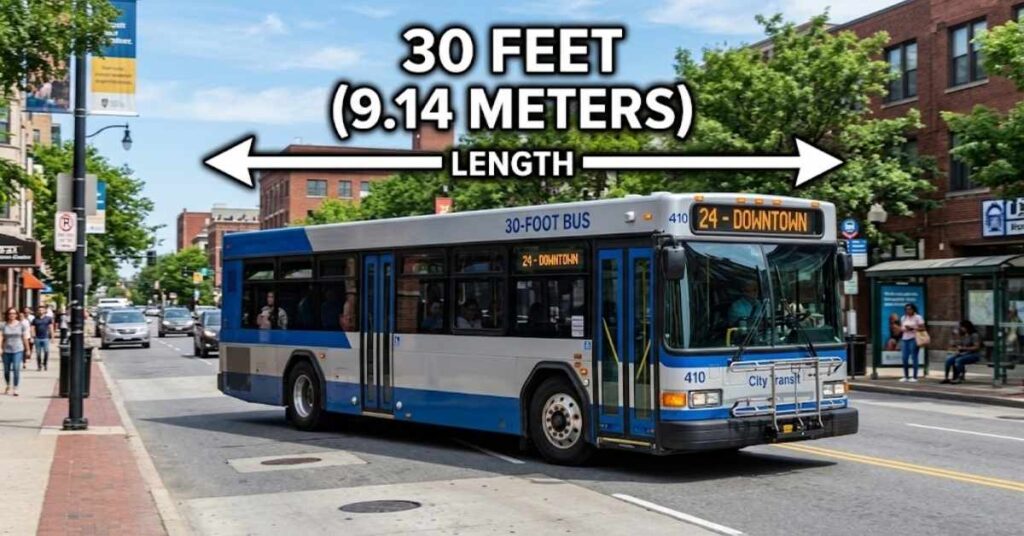
Shorter city buses and shuttles run about 30 feet. They’re the small cousin of the 40 foot standard bus.
Stand beside one and you’ll see 30 feet compared to human height right away. You’d fit about five and a half of yourself along its side.
A Three-Story Building’s Height
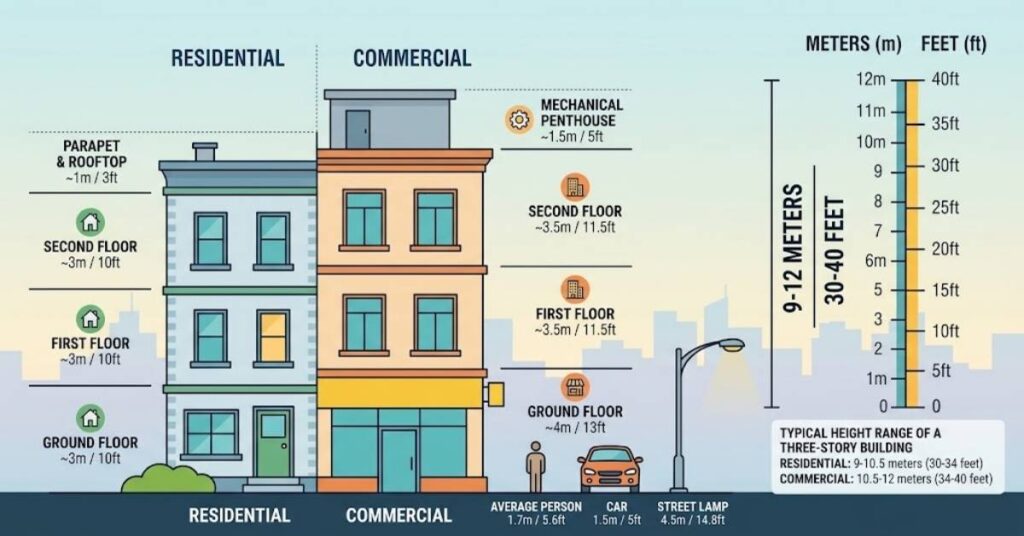
Most floors run about 10 feet, so a three-story building stands near 30 feet. It’s one of the cleanest things that are 30 feet tall you can spot on your commute.
Look up next time you pass an apartment block. You’ll never miss the scale again.
A Utility Pole Above Ground
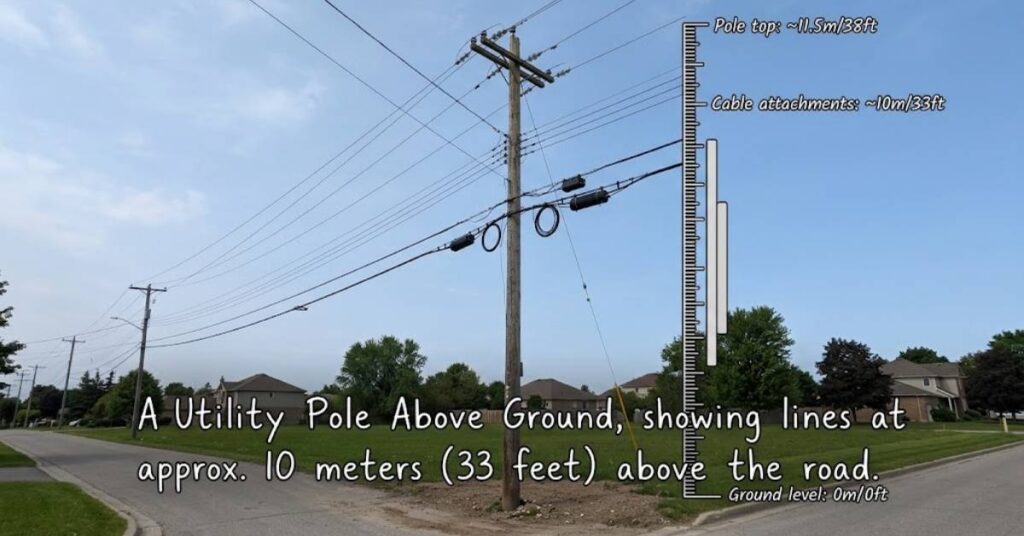
Poles often come in 35 to 40 foot lengths, with about 6 feet buried. That leaves around 30 feet standing in the air.
You walk past them daily, and now you’ve got a ruler on every block.
A 30-Foot Sailboat

This is the classic starter cruiser. It sleeps four, fits a tiny galley, and handles a weekend trip with ease.
Wondering about boat dimensions in feet for something this size? Beam usually runs 10 to 11 feet.
What About a 30 Foot Diameter? The Circle Math Made Simple
Here’s where many people get stuck. A 30 feet diameter isn’t the same as 30 feet long in a straight line. It’s the width of a circle at its widest point.
Start with the radius of a circle. It’s half the diameter, so here it’s 15 feet. Everything else comes from that number.
Use these quick results for a 30 foot circle:
- Circumference: 30 × 3.14159 = about 94.25 feet
- Area: 3.14159 × 15 × 15 = about 706.9 square feet
Say you’re picking a pool or a trampoline pad. The 30 foot circumference tells you how much fencing or edging you’ll need. And the 30 foot circle area shows how much ground it covers.
Don’t mix up diameter and circumference, either. One’s the width, and the other’s the trip around. People mess it up all the time, and it costs them money at the hardware store.
Why Visualizing 30 Feet Beats Memorizing It
Numbers fade fast. Pictures stick. When you link 30 feet to a limo, a volleyball court side, or a three-story wall, you’ll recall it for years.
Here’s a quick mental trick. Picture 30 feet as two sedans nose to tail, or six tall adults lying in a row. That works anywhere.
This helps when you’re comparing everyday objects length comparison for a project. Try it for fences, rugs, banners, or garden beds. You’ll catch mistakes before you buy.
30 Feet Long vs 30 Feet Tall: Does the Number Change?
No, the number stays the same. 30 feet long means flat across the ground. 30 feet tall means straight up. Only the direction changes.
So why does it feel so different? Height makes your brain panic. A 30-foot driveway feels like nothing, but a 30-foot ladder feels huge.
Here’s a trick for measuring 30 feet long height without a ladder. Wait for a sunny day and compare shadows. If you’re 5.5 feet tall and your shadow is 3 feet, a pole with a 16.4 foot shadow is about 30 feet tall.
30 Feet Tall Compared to a Human
An average adult stands about 5.5 feet tall. So 30 feet compared to a human works out to roughly five and a half people stacked head to toe.
That’s giant territory. Picture yourself standing beside a small statue or a movie monster prop. Most of them top out right around here.
Next time you see a billboard figure on a highway, guess its height. You’ll probably be surprised how close 30 feet turns out to be.
FAQs
How long is 30 feet in meters?
It equals 9.144 meters. For a quick guess, round it to 9 meters.
How many inches are in 30 feet?
There are 360 inches in 30 feet. Just multiply 30 by 12.
What does 30 feet look like?
Picture two sedans parked bumper to bumper. Or imagine six adults lying head to toe.
How many steps does it take to walk 30 feet?
Most adults need about 12 steps, based on a 2.5 foot stride. Your own count might be 11 or 13, so test it once.
What things are 30 feet long?
A stretch limo, a canal narrowboat, and a small transit bus all come close. A 30-foot flagpole and a round pool, measured across, match it too.
Wrapping Up
You’ve now got 30 feet from every angle. It’s 9.144 meters, 360 inches, 914.4 centimeters, or 10 yards. Better still, you can picture it as a stretch limo, a volleyball court side, or about 12 steps across your hallway.
Next time a listing or a fence plan throws that number at you, you won’t need to guess. Pace it out, compare it to something familiar, and you’ll catch mistakes before they cost you.
Got a favorite 30 foot comparison that didn’t make the list? Drop it in the comments. And if this saved you a trip to the hardware store, share it with a friend who’s about to measure something.

Liam Carter is a measurement focused writer and researcher at ExploreZeto.com. He creates clear, practical content covering measurement units, conversions, calculations, tools, and everyday applications. Liam focuses on careful research, straightforward explanations, and useful examples, helping readers understand measurement concepts with greater clarity and confidence.